Plumber to Fix a Toilet, Faucet or Shower in Camp Hill, PA: Repair or Replace
A dripping faucet or a toilet that keeps running looks like a small job until the water bill arrives. Most fixture problems come down to one worn part, and the useful question is whether that part is worth fixing or whether the whole fixture has reached the end of its life.
Tell dispatch which fixture it is, what it does, and if the water to it is already shut off. Someone from the plumbers serving your area arrives with the usual parts and says whether repair or replacement makes more sense.
- Licensed and insured plumbers
- Same-day service when available
- 24/7 emergency dispatch
Faucet repair: what a drip is really telling you
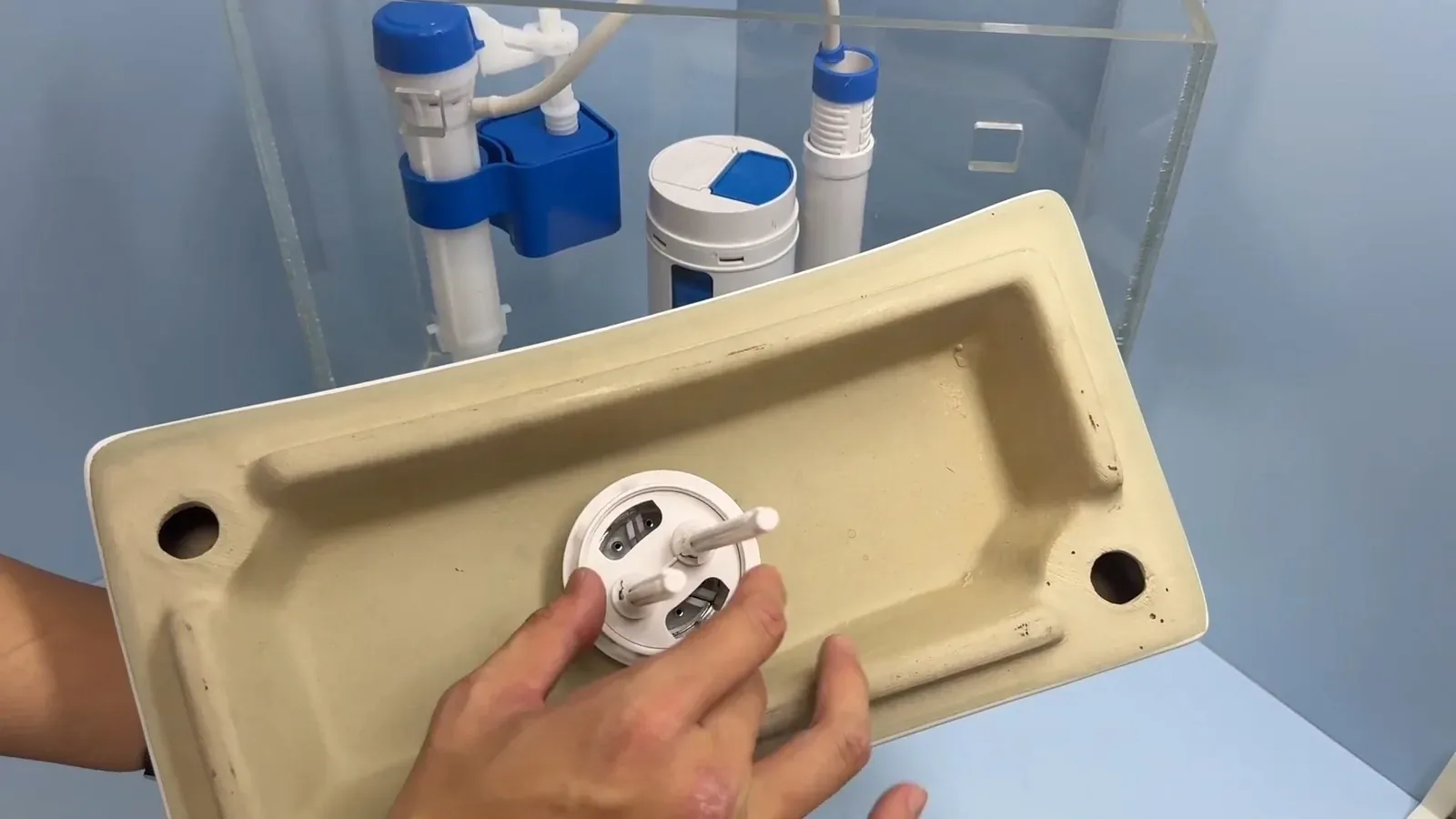
A faucet drips because something inside it no longer seals. In a compression faucet with two handles the culprit is usually a worn rubber washer or a pitted seat. In a single-handle faucet it is normally a cartridge or, on some kitchen models, a set of small rubber seals around a ball or disc. Dripping from the spout points to those parts, while water at the base of the handle points to a worn O-ring.
Repair makes sense when the faucet is otherwise sound, the finish is good and parts are still sold for that model. Replacement makes sense when the body is corroded, the cartridge is no longer made or the repair would cost close to a new faucet. A plumber can usually say which it is within a few minutes of taking the handle off.
- A drip from the spout when the faucet is off: a worn cartridge, washer or seat.
- Water around the handle: an O-ring or packing nut that has loosened or worn.
- Weak flow from one faucet only: a clogged aerator or a partly closed supply valve.
- Hot and cold mixing when the faucet is off: a failing cartridge in a single-handle model.
Shower valve, shower head and a leak behind the wall
A shower that will not shut off fully, runs hot and cold unevenly or drips from the head is usually a valve problem, not a head problem. The cartridge or stem inside the wall valve wears the same way a faucet cartridge does. Replacing it means shutting off the water, removing the trim and handle and swapping the part, which a plumber can do without opening the wall on most valves.
A stain on the ceiling below a bathroom, soft drywall beside the tub or a musty smell after showers deserves more attention than a drip. Water may be escaping from the valve connections, the drain or the tile joints. Say so on the call, because that points the visit toward finding the source, and the steps on the leak detection page apply.
Toilet or tub not behaving?
Name the fixture and the symptom when you call. Common parts go on the truck.
Call (717) 897-7332Fixture running or dripping?
Say which fixture it is and whether the supply valve is closed. The call is passed along to a nearby plumber.
Call (717) 897-7332Bathtub plumbing: drains, spouts and replacements
A tub that drains slowly usually has hair and soap in the strainer or the stopper linkage, and a slow drain deeper in the line is covered under clearing the line behind the sink. A tub spout that drips, a diverter that sends water to the spout when the shower is on and an overflow plate that leaks all have simple fixes, usually a washer, a gasket or a replacement diverter spout.
A stain on the ceiling below, a soft spot beside the tub or tile that sounds hollow can mean a slow leak behind the wall. Stop using that fixture and tell dispatch before anything is opened up.
Bathtub installation is a larger job: the old tub comes out, the drain and overflow are fitted to the new one, the supply lines are reconnected and the tub is set and leveled. It often involves the wall around it, so plan the plumbing and the tile or surround work together, and ask who handles each part.
Bathroom sink and vanity problems
Under a bathroom vanity you will normally find two supply lines with shutoff valves, a P-trap and a drain tail. A wet cabinet floor comes from one of those connections or from the faucet above. A plumber tightens or replaces the failed part, and if the cabinet base is swollen from long exposure, tells you plainly so that you can decide on the cabinet separately.
A pop-up drain stopper that will not hold water, a slow drain and a gurgling sink each point to a different part. Taking the trap apart is often the quickest check, and it is a good moment to look at the shutoff valves, since a stiff valve now is a stuck valve in an emergency.
Kitchen sink: faucet, sprayer and under-sink leaks
The kitchen sink carries more connections than any other fixture: the faucet, a sprayer hose, supply lines, the disposal, the dishwasher drain and sometimes a filter line. A leak under the sink can come from any of them, so the first step is to dry everything with a towel and watch where the first bead of water forms. Photos of that spot help the plumber arrive with the right parts.
Pull-down sprayer hoses that no longer retract, a faucet that sways in its hole and a spout that sprays sideways because of a clogged aerator are all common service calls. When the disposal is involved, the garbage disposal page covers jams and replacement.
Toilet repair: running, weak flush, rocking and leaks
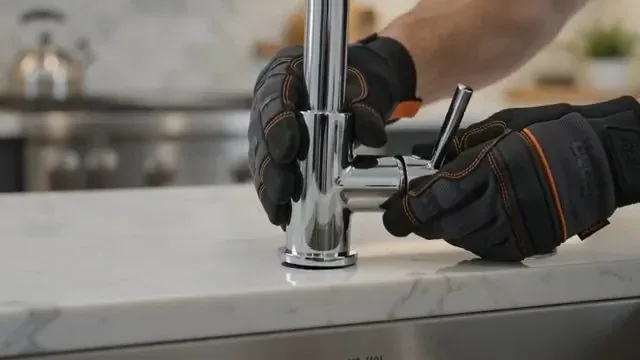
A toilet that runs after the flush is nearly always a flapper that no longer seals or a fill valve that does not shut off. A weak flush points to clogged rim jets, a low water level or a partial clog in the trap. A toilet that rocks has a loose base or a bad wax ring, and water at the floor around the base means the seal has failed and the floor may be wet beneath it.
Do not wait on a base leak. Water that seeps under the toilet softens the subfloor over time. Shut the supply valve behind the toilet, towel up the water and have the seal replaced. If the toilet is cracked, replacement is the only repair.
- Shut the supply valve behind the toilet by turning it clockwise.
- Lift the tank lid and look at the flapper and fill valve; a flapper that sits crooked is a quick fix.
- Check the base for dampness with a dry paper towel.
- Call if the problem is at the base, the tank cracked or the flush stays weak.
Toilet install and replacement
A toilet replacement means shutting off the water, emptying the tank and bowl, unbolting the old unit, fitting a new wax ring or seal and setting the new toilet level. The part people often miss is measuring: the distance from the wall to the center of the drain, called the rough-in, decides which toilets will fit. Twelve inches is the common figure, but measure before buying.
If you have bought a toilet already, say so when you call and give the model, so the plumber can check the rough-in and height. A plumber can also advise on bowl shape and flush type, on whether a bidet seat needs a nearby outlet, and on replacing the shutoff valve and supply line while the toilet is off.
| Problem | Usually repair | Usually replace |
|---|---|---|
| Dripping faucet | Cartridge, washer or O-ring | Corroded body or parts no longer sold |
| Running toilet | Flapper or fill valve | Cracked bowl or tank |
| Shower will not shut off | Cartridge or stem | Valve body damaged |
| Toilet leaks at the base | New wax ring or seal | Cracked porcelain |
| Rusty or stiff shutoff valve | Rarely worth repairing | New quarter-turn valve |
Shutoff valves, supply lines and a faucet swap
Every fixture should have its own shutoff valve, so that a repair does not mean closing the whole house. Older multi-turn valves seize or drip when turned, and replacing them with quarter-turn valves is a short job that pays off the first time something breaks. Braided supply lines are the usual replacement for stiff old tubing.
A faucet replacement is also a plain job once the supplies are sound. The old unit comes out, the sink or counter is cleaned, the new faucet is mounted and the connections are tested for leaks. Hard-to-reach nuts behind a sink are why some people prefer to have it done.
Also on the list: washer, dishwasher and ice maker hookups, outdoor hose bibs that need a frost-proof replacement before winter, and bidet seats. Bigger jobs start with a rough-in plan, which the plumber can talk through before any work is booked. Remodel plumbing and renovation plumbing cover moving a toilet, a tub-to-shower conversion, a laundry room, a wet bar or plumbing for an ADU, and construction plumbing means roughing in supply and drain lines before walls close. Plumbing system installation and plumbing system upgrades, including energy-efficient plumbing upgrades such as low-flow fixtures and better shutoffs, are planned the same way, and residential plumbing upgrades for fixtures and home plumbing systems begin with the rough-in measurements. What shapes fixture pricing is laid out separately.
Fixture repair questions
Should I repair or replace a leaking faucet?
Repair when the faucet is sound and parts are available, because a cartridge or washer is a short job. Replace when the finish is worn through, the body is corroded or the repair would cost close to a new faucet. A plumber can tell you after looking inside.
My toilet keeps running. Can I stop it before the plumber arrives?
Turn off the supply valve behind the toilet and the water stops filling. Lift the tank lid and check whether the flapper sits flat; jiggling the handle that seals it is a harmless test. If it still runs after that, the fill valve probably needs replacing.
How do I know which toilet will fit my bathroom?
Measure from the finished wall behind the toilet to the center of the floor bolts. That rough-in distance is commonly twelve inches but not always. Bowl length matters in a small room, so measure that too.
There is water under my sink. What should I do first?
Shut the two small valves on the supply lines, empty the cabinet and dry every connection. Then run the water briefly and watch for the first drop. Tell dispatch where it forms, and mention whether a disposal or dishwasher is connected.
Other fixture and drain work
Fixture trouble in Camp Hill?
Call dispatch, name the fixture and say what it does. Whoever covers your street picks it up from there.
Call (717) 897-7332- Licensed and insured plumbers
- Same-day service when available
- 24/7 emergency dispatch