
Water Softener and Filtration Service in Camp Hill, PA: Install, Repair and Replace
Cloudy glasses, white crust on faucets and a dishwasher that leaves spots all point to the same thing, dissolved minerals. A filter, a softener or both can deal with that, but only after you know what is in the water.
Call dispatch, say what you see and what equipment you already have, and a plumber serving your area can talk through what fits: a new system, a repair or a different approach.
- Licensed and insured plumbers
- Same-day service when available
- 24/7 emergency dispatch
Water softener: what it does and who needs one
Water softener companies sell very different equipment, and water treatment or conditioning covers everything from a salt-based softener to a filter that only changes taste. Describing the symptom first keeps the conversation on what you need.
A water softener removes the minerals that make water hard, mainly calcium and magnesium, by swapping them for sodium or potassium on a bed of resin. Hard water leaves scale in pipes and heaters, dulls soap and leaves spots on glass. A softener does not make water safer to drink, and it does not remove most contaminants, so it is one tool and not a catch-all.
There is no verified hardness figure for Camp Hill on this page. Most of the area is supplied by Pennsylvania American Water, which publishes an annual water quality report you can look up by ZIP code, and a home test kit or a test from a plumber gives the reading at your tap. The numbers should decide whether a softener is worth installing.
- White crust on faucets, shower heads and kettles: scale from hard water.
- Soap that will not lather, laundry that feels stiff: minerals in the wash water.
- A water heater that makes noise or runs less efficiently: scale buildup in the tank.
- Spotted dishes even with rinse aid: dissolved minerals drying on glass.
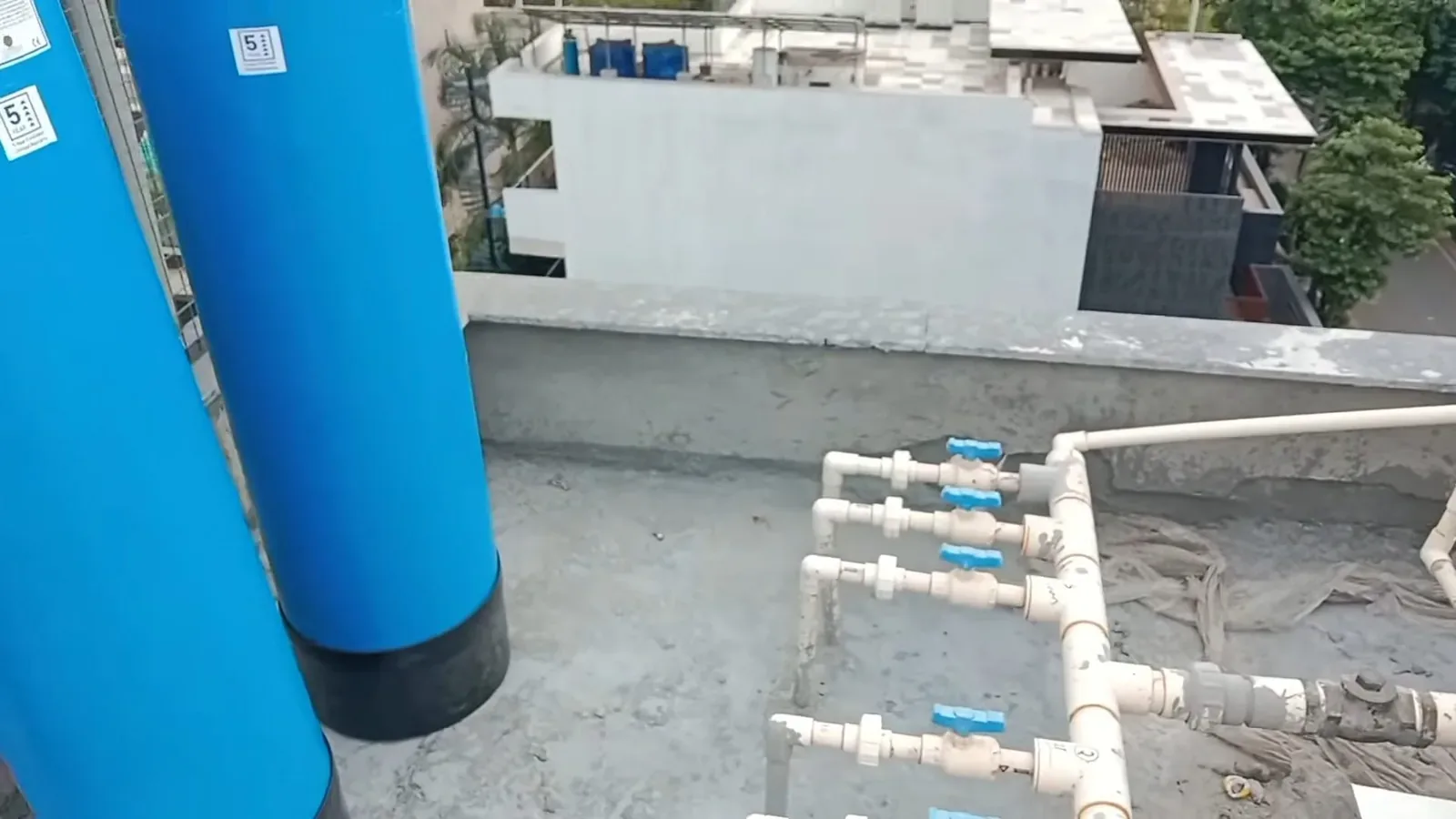
Whole-house filtration: filters at the point of entry
A whole-house filter is fitted at the point of entry, ahead of the first branch, and treats everything downstream. A sediment filter catches sand and rust. A carbon filter reduces chlorine taste and some organic compounds. Each filter type targets a different problem, so the right choice follows from what a test or the utility report shows.
Filters also differ by micron rating, which describes the size of particle they stop, and a finer rating clogs sooner. Ask about the flow rate, because an undersized filter can cut pressure. Ask how often cartridges change and what they cost to replace, since that is the recurring expense. Place it so that it is easy to reach, with a shutoff valve on each side and a bypass if the system needs one.
A water test comes first. Ask a plumber for a test at your tap, use a home kit, or read the annual water quality report for your ZIP code, and let the numbers choose the equipment.
Water treatment already installed?
Tell dispatch the make of the softener or filter and what it has stopped doing.
Call (717) 897-7332Hard water or a failing softener?
Say what you notice at the taps and what equipment you have. Dispatch hands the call to a plumber working near you.
Call (717) 897-7332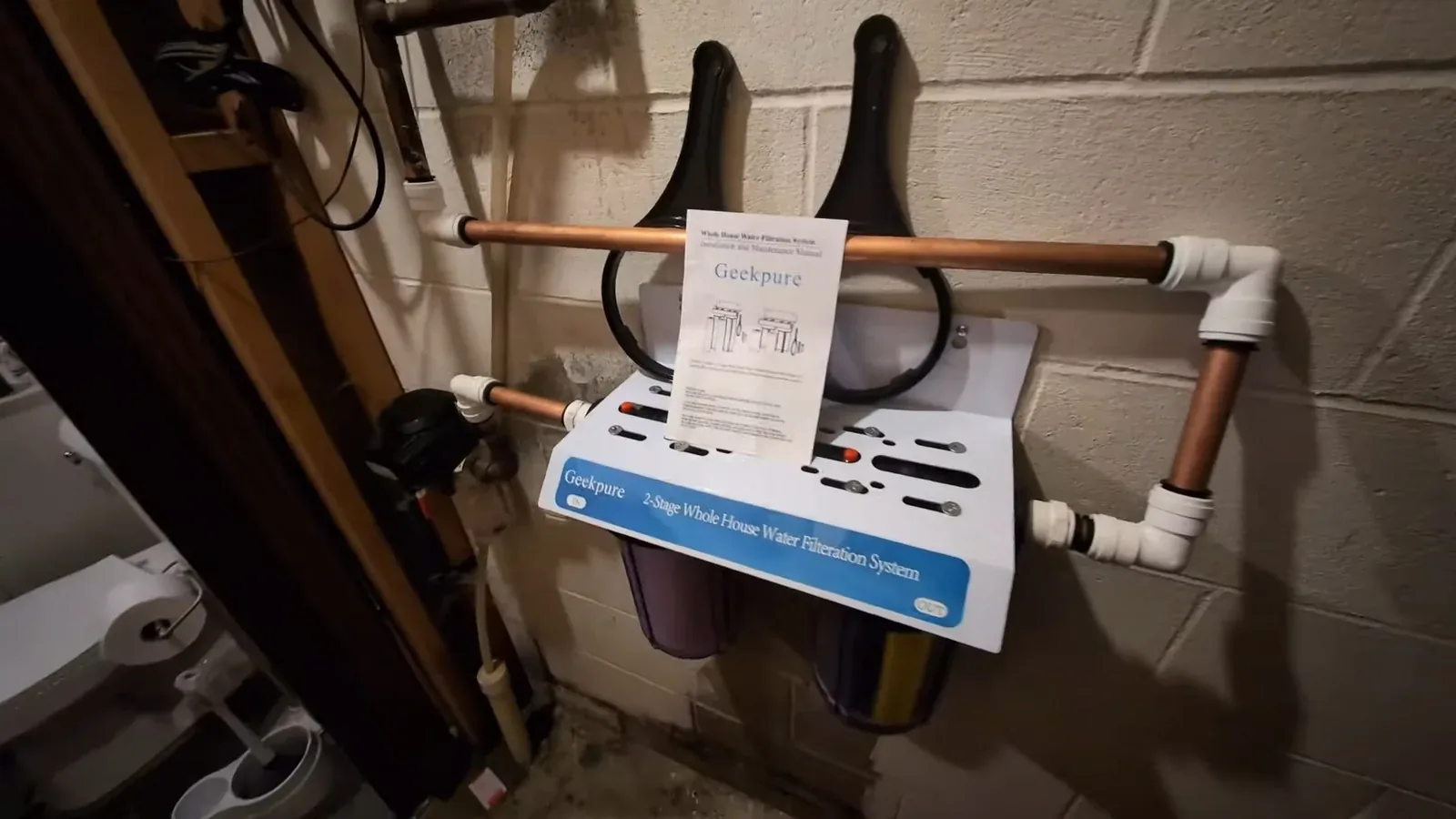
Softener repair and service: salt, brine and regeneration
A softener works in cycles. Water flows through the resin until it fills with hardness minerals, then the unit flushes it with brine from the salt tank and rinses. That is called regeneration, and it runs on a timer or by water use. The usual faults are an empty salt tank, a salt bridge that stops brine forming, a clogged injector or a control valve that does not cycle.
If the water has gone hard again, check the salt level first, and tap the side of the tank to see if a crust has formed over a gap. A unit that runs constantly to the drain, leaks at the control head or makes noise in the cycle needs a plumber. Broken valves and fittings on a tank that was moved are repairable if the tank itself is sound.
- Check the salt level and break up any hard crust.
- Look at the bypass valve; if it is set to bypass, the water is not being softened.
- Check the drain line for kinks or ice if it runs outdoors.
- Call if the unit leaks, runs constantly or the water is still hard after regeneration.
Softener installation and replacement
A softener needs a place near the water line entry, a drain for the regeneration water, an outlet and room for the salt tank. The plumber connects it to the main with a bypass valve, runs the drain line to a floor drain or standpipe and sets the hardness and cycle. Some people replace an old tank-style softener with a newer model, and the existing connections often carry over.
The plumber will also check the incoming water pressure and the shutoff valves on either side, because a softener adds a few new connection points to the main. Ask what the drain connection needs, how much salt the unit uses and whether the household would rather use potassium. Ask also about the water heater: softened water can be hard on some anode rods, and the plumber can advise.
Reverse osmosis and drinking water systems
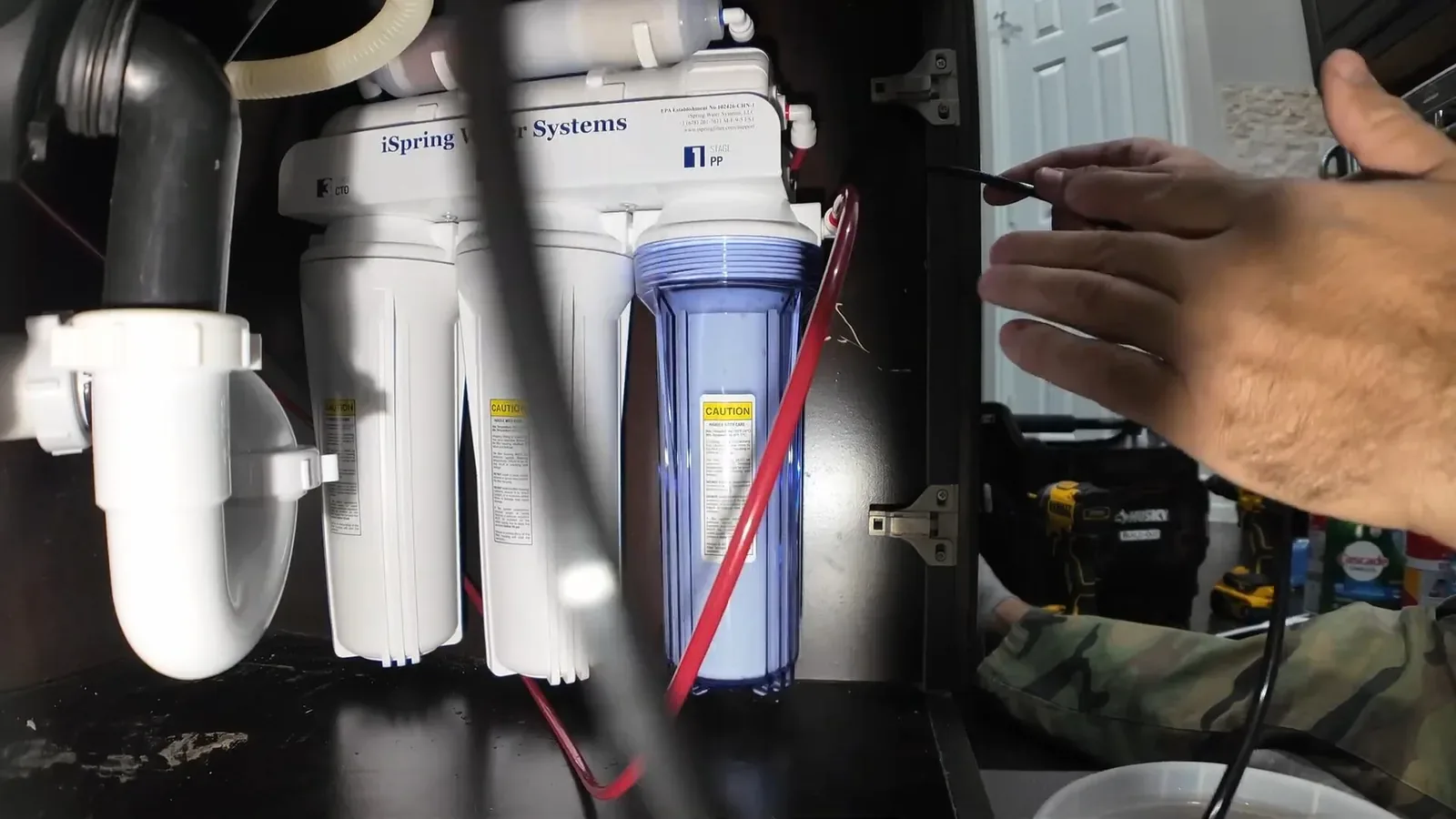
Reverse osmosis pushes water through a fine membrane to leave most dissolved material behind. In a home it is usually fitted under the kitchen sink with its own tap, since drinking and cooking are where it matters. It makes a small amount of treated water at a time into a storage tank and sends the rejected water to the drain.
Membranes and filters need replacing on a schedule, and the tank should be sanitized when they are. Ask for the replacement intervals in writing, and ask whether the system can feed an ice maker. A reverse osmosis unit wastes some water to the drain as it works, so ask how much, and where the drain saddle will sit on the sink trap. Some units also include a pump for low-pressure homes, which the plumber can explain at the visit.
Under-sink and drinking water filters
An under-sink filter treats the cold water at one tap, which makes it the simplest option. A carbon block cartridge improves taste and smell and reduces some contaminants, depending on the certification of the cartridge. Check the certification against what you actually want removed, because a general carbon filter does not handle every contaminant.
Installation takes a few connections to the cold supply line and a separate faucet or the existing one. Replacement cartridges are the running cost. For leaks around the supply lines or a faucet swap, see replacing the faucet and supply lines.
| Goal | Option | Notes |
|---|---|---|
| Scale on fixtures and heater | Water softener | Needs salt, a drain and a hardness test |
| Rust, sand and sediment | Whole-house sediment filter | Check the flow rate |
| Taste and smell of chlorine | Carbon filter | Whole house or under sink |
| Drinking and cooking water | Reverse osmosis | Membrane and filters replaced on a schedule |
| One tap only | Under-sink filter | Simplest to fit and maintain |
A water heater suffers most from hard water, so mineral buildup is also covered on the water heater repair page. Equipment type, plumbing changes and salt or cartridge upkeep are the drivers on the water treatment pricing notes.
Softener and filter questions
How do I know if I need a water softener?
Look for scale on faucets and spots on glassware, then test the water. A home test kit gives a hardness reading, and the utility report for your ZIP gives the area picture.
Does a softener make drinking water safer?
No. It removes hardness minerals, not most contaminants. A filter or reverse osmosis system treats drinking water.
Why is my softener not softening?
The common causes are an empty salt tank, a salt bridge, a bypass valve left open or a control valve fault. Check those, then call.
Can a water conditioner or softener be repaired?
Often yes. Water conditioner repair covers the control valve, the injector, the brine tank and fittings that broke in a move. A unit that leaks from the tank itself is usually replaced.
How often do filter cartridges need changing?
It depends on the model and the water. Follow the maker's schedule, and change sooner if flow drops or the taste returns.
Water quality and plumbing nearby
Hard water questions?
When you call dispatch, describe what you see at the taps. The call is passed to a plumber who works your address.
Call (717) 897-7332- Licensed and insured plumbers
- Same-day service when available
- 24/7 emergency dispatch