
Water Line Repair and Replacement for Camp Hill Homes: Low Pressure and Wet Yard Spots
The first sign of a bad water line is usually small: a tap that runs weaker than it used to, a damp strip across the lawn, or a meter that keeps turning when nobody is home. The line in question is the pipe that brings water from the main in the street to your house.
Tell dispatch what you noticed and where the meter and shutoff are. That points a plumber toward the right section of line before anyone starts digging.
- Licensed and insured plumbers
- Same-day service when available
- 24/7 emergency dispatch
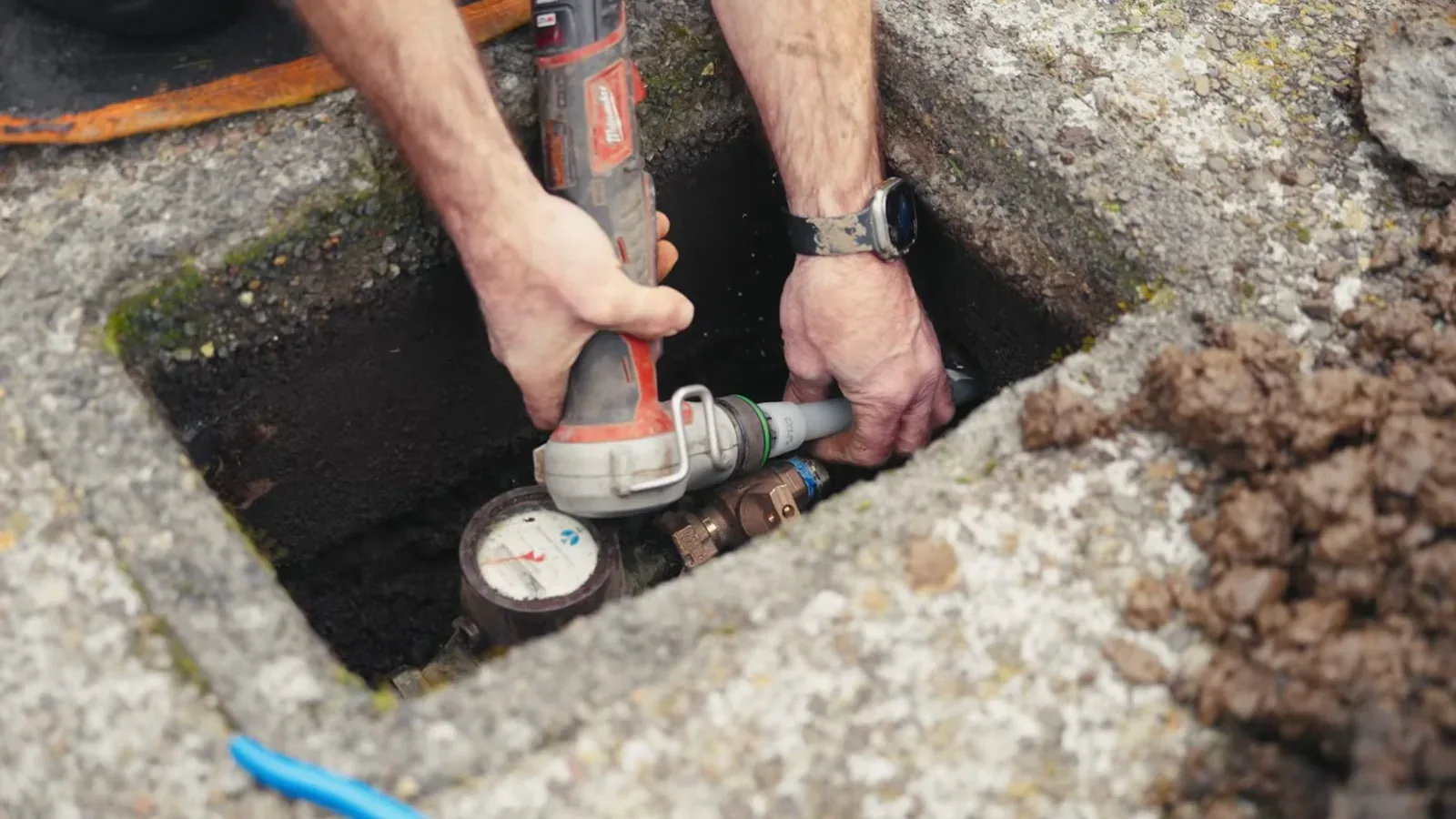
Which part is yours? The yard line, the meter box and the street
A water service has three parts. The main runs under the street and belongs to the water company, and for Camp Hill Borough that company is Pennsylvania American Water. The meter sits in a box at the property line or inside the house and usually belongs to the company too. The line from the meter to the house belongs to the homeowner, and where the company's responsibility ends and yours begins varies by utility and by situation, so ask the water company at 1-800-565-7292 before paying for a repair near the street.
The distinction matters for the repair order. A leak between the main and the meter is the company's problem. A leak between the meter and the house is yours. A symptom in the street, such as a dry neighborhood or a main break, is not a plumbing call at all. A plumber can confirm which side of the meter the water is escaping on with a quick test at the shutoff.
| Piece | Usually owned by | First call |
|---|---|---|
| Main in the street | The water company | Water company |
| Meter and meter box | The water company | Water company |
| Line from meter to house | The homeowner | A plumber |
| Shutoff valve inside the house | The homeowner | A plumber |
Call 811 first, even for a small hole. Buried gas, electric and communication lines run through many yards, and hitting one is both dangerous and costly.
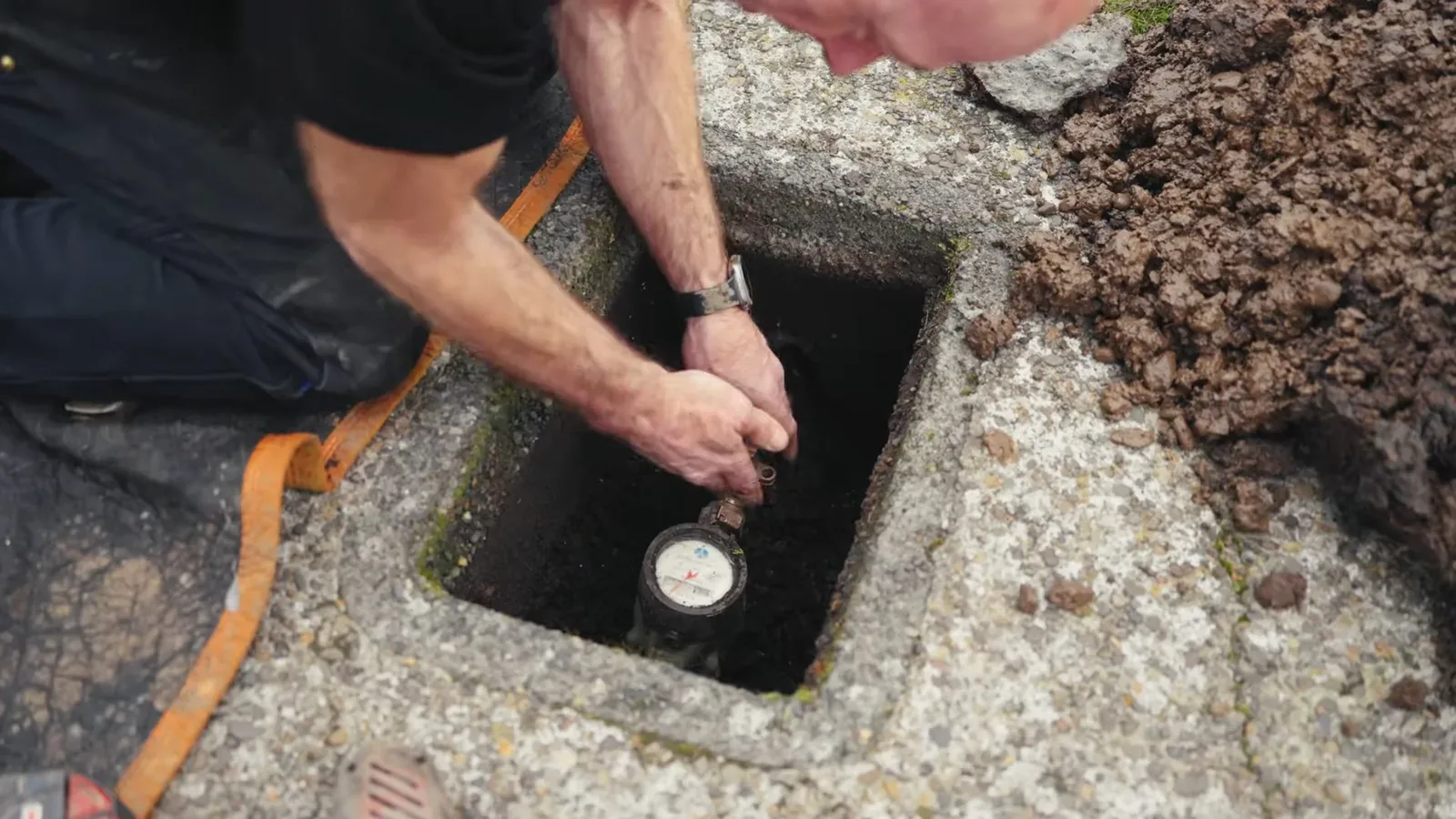
Service and yard line: finding a leak that never reaches the surface
A line buried a few feet deep can leak for months before the surface shows it. Signs include a suddenly soft or green patch of lawn, a lower bill after a repair is made elsewhere, a drop in pressure at every tap, and a meter that moves with all taps off. If the whole house has weak pressure and the neighbors do not, the service line is a prime suspect.
The plumber closes the house shutoff and watches the meter to confirm the line is the source, then traces its path with electronic equipment and marks where to dig. Before digging, Pennsylvania requires a call to 811, and the plumber normally files it. Expect at least three business days between the request and the dig for the lines to be marked.
Pressure dropped across the whole house?
First ask a neighbor if the pressure dropped there too. If not, call dispatch and say when it started.
Call (717) 897-7332Water line repair: fixing a section of the line
When the failure is a single break or a bad fitting, a repair is the proportionate answer. The plumber exposes the pipe, cuts out the damaged section and installs a new piece with the right couplings, then tests the line under pressure before backfilling. The repair is limited to the dig, which is why it is cheaper and less disruptive than a replacement.
Ask what the pipe is made of, whether the fittings are suited to buried use and how deep the new section sits. A shallow repair in a cold winter can freeze, so depth is a real question. Ask also whether the soil around the pipe was replaced with clean bedding, because sharp stones against a plastic pipe cause the next leak.
Water line replacement: when the whole run goes
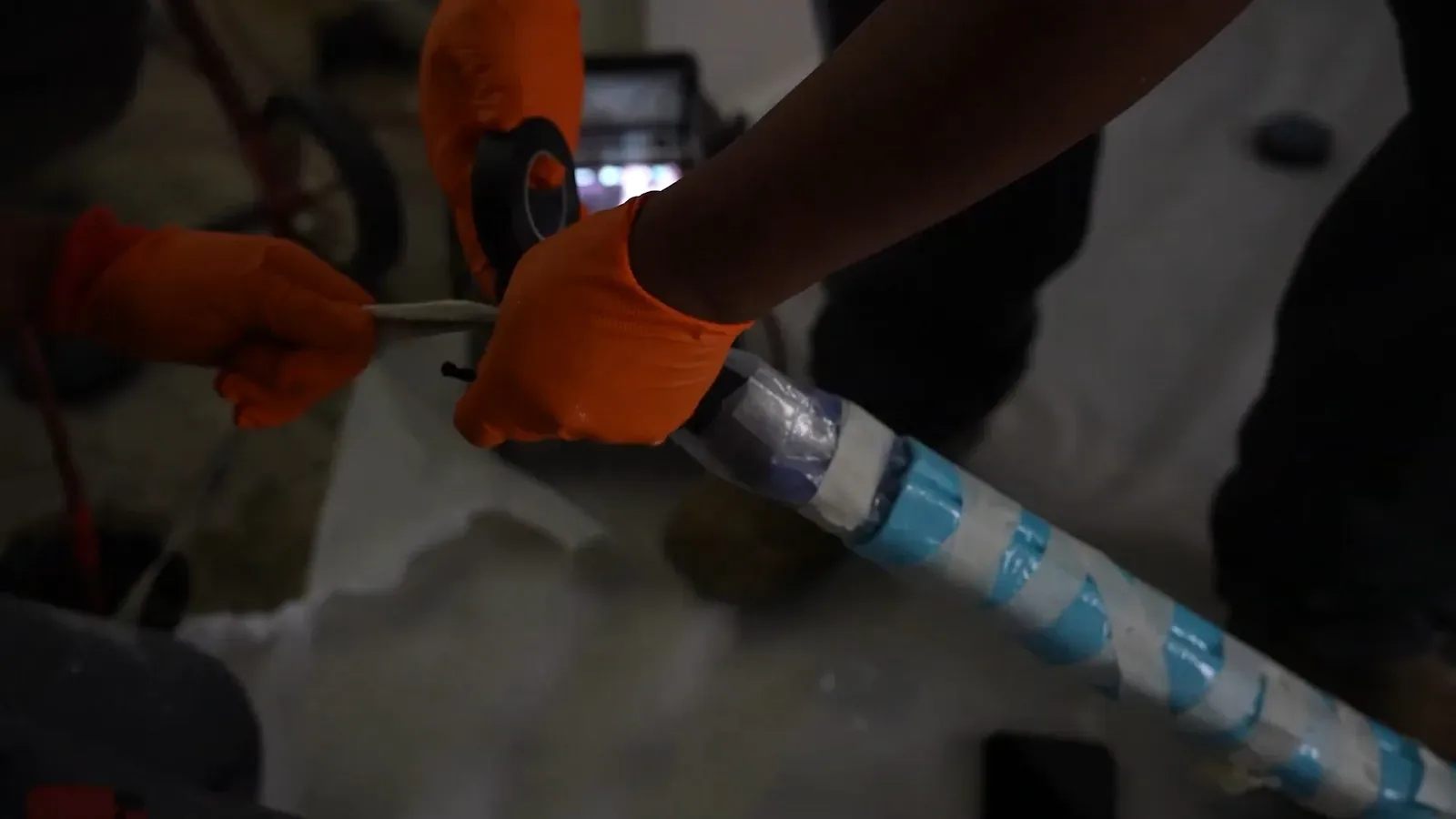
Replacement is the answer when the old line is lead, galvanized steel or otherwise at the end of its life, or when repairs keep recurring. A new service line can be installed in an open trench or with trenchless methods that tunnel under a driveway or a walkway. Trenchless costs more per foot of line but can save the cost of restoring a damaged driveway.
Because the section near the meter is the water company's, a replacement often needs coordination with the utility. Ask whether the company must disconnect or reconnect at the meter and whether it needs notice. Ask too whether a permit or inspection applies from the borough, and check the contractor's registration number with the Attorney General's office, 1-888-520-6680, before you sign.
Line that needs replacing?
Request a plumber who will explain trench against trenchless and what happens to the driveway or yard.
Call (717) 897-7332Pressure, regulators, shutoff valves and meters in short
- High water pressure: a gauge on an outdoor spigot shows it; over about 80 psi stresses fixtures and appliances.
- Low water pressure: check whether it affects every tap; if so, look at the main shutoff, the pressure regulator and the service line.
- Pressure regulator (PRV): a bell-shaped valve near the shutoff that lowers street pressure; it wears out and can be replaced in a short visit.
- Main water line: the pipe inside the house between the meter and the first branch; its shutoff should turn easily.
- Shutoff valve: turn it fully both ways once a year; a valve that will not move needs replacement before an emergency.
- Water meter: a moving dial with all taps off means a leak; the leak search is described on the leak detection page.
- Pressure testing: a timed hold on the line after repair proves the fix.
Trench length, depth, surface restoration and utility coordination all move a service line quote, as the notes on service line cost drivers explain.
Yard, meter and service line questions
I have a leak in my yard or meter box. What do I do?
Say a damp patch appears near the meter box. Close your house shutoff valve and watch the meter: if it stops moving, the leak is on your side; if it keeps moving, it is on the water company's side of the meter. Call the water company in the second case and a plumber in the first.
What is the main water line, and who looks after it?
Inside a house the main line runs from the meter to the first branch, and it is yours. The main in the street belongs to the water company. If you cannot shut the house valve, that is a plumber's job before an emergency.
Who repairs the water line from the curb stop to the house?
The curb stop is the valve near the street. A leak between it and the house is usually the homeowner's to repair, but the exact dividing line varies, so the water company can tell you where its responsibility ends. Ask for the answer before hiring work.
There is no water at my house. How do I check the meter?
There are two quick routes. Ask a neighbor if they have water; if they do not, call the water company. If only your house is dry, open the meter box, check that the meter valve is open and the dial is moving when you open a tap, and call a plumber if the valve is open and nothing flows.
Next to the water line
Weak water or a wet lawn
Call at any hour. Describe the pressure or the damp spot and the dispatcher passes the call on from there.
Call (717) 897-7332- Licensed and insured plumbers
- Same-day service when available
- 24/7 emergency dispatch