Emergency Water Damage Restoration in Camp Hill, PA: Water Removal and Drying
The common belief is that water damage can wait until the plumbing is fixed. It cannot. Wet drywall, carpet pad and subfloor start to deteriorate within a day or two, and the longer water sits, the more has to be removed rather than dried.
This page covers removal, drying and mold testing: pulling out standing water, drying the structure and contents, testing for mold where water has sat and documenting the loss. A plumber serving your area deals with the broken pipe; the water damage line deals with the water that came from it.
- Licensed and insured plumbers
- Same-day service when available
- 24/7 emergency dispatch
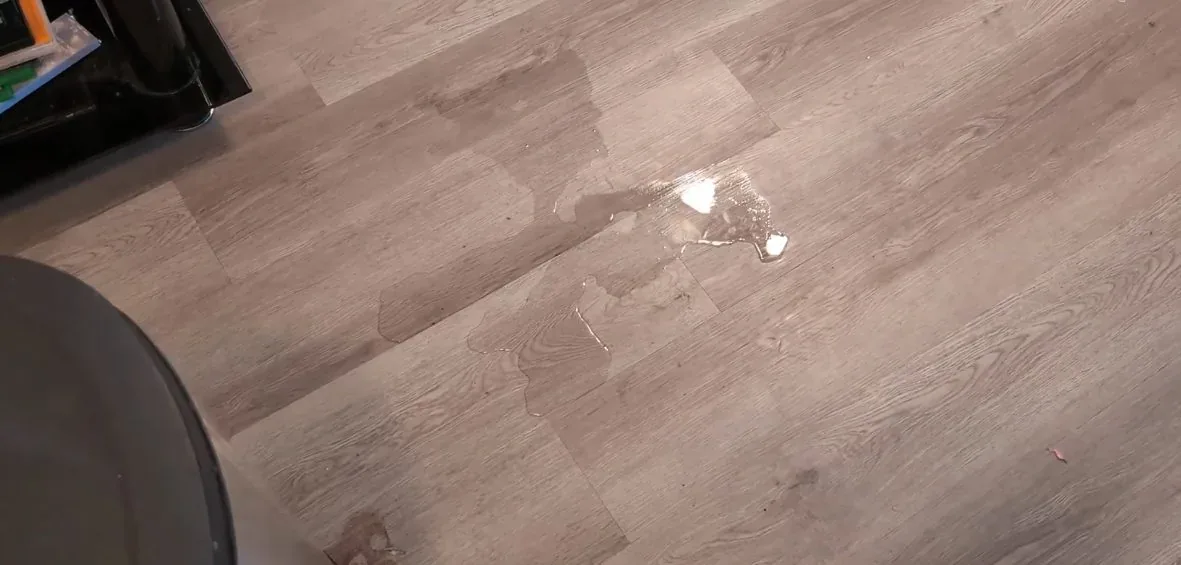
For water already on floors, walls or ceilings, call this number. For a pipe that is still running, shut the main valve first, then call dispatch on the main line. (717) 349-9255
Water extraction and removal: the first hours
Extraction comes first because every hour of standing water spreads moisture into drywall, baseboards and the flooring beneath. Crews use pumps for deep water and wet vacuums for the rest, then work along the edges where water wicks into walls. Carpet pad is usually discarded, since it holds water like a sponge and dries slowly, while the carpet itself can sometimes be lifted and dried.
Until the crew arrives, shut off the water if a pipe is the source, switch off power to affected rooms only when the panel can be reached from a dry spot, move small items and furniture to dry areas and photograph everything before moving it. Do not use a household vacuum on water, and stay out of rooms with water near outlets.
- Stop the source. Close the main water valve for a pipe failure.
- Make it safe. No wading near outlets, appliances or a breaker panel.
- Photograph the water line on walls, damaged contents and the source.
- Call the water damage line and describe how deep the water is and how long it has been there.
Water mitigation is the trade term for stopping further loss: extraction, removal of material that cannot be saved and drying. Water remediation and water damage remediation are other names for that same extraction and drying stage, and water restoration companies may offer one stage or all of them. Restoration is the rebuild that follows, such as new drywall, paint and flooring, and it is often a different contractor. Disaster restoration firms and general restoration contractors divide the work differently, so ask who handles which stage. A public adjuster, who is hired by an owner to prepare an insurance claim, is a separate role from the crew that dries the building.
What happens on a water damage job
A job runs in a predictable order. The crew checks for hazards, finds the extent of the wet area with a moisture meter, removes standing water, takes out materials that cannot be saved, sets air movers and dehumidifiers and returns to read the moisture levels until they match dry reference readings. Equipment is removed only when the readings say the structure is dry, not on a calendar date.
Ask what the dry standard is, how often readings are taken and how the crew records them. The log is useful to an insurer, and it is also how you know the work is finished.
Expect the crew to ask when the water started, whether it is clean water from a supply line, gray water from an appliance or contaminated water from a drain or the outdoors, and which rooms are affected. Those answers set the equipment and the materials that can be saved, and they are why a call is often followed by a short photo or two.
Pipe still running?
Close the main valve, then call dispatch so a plumber serving your area can repair the pipe while the drying is arranged.
Call (717) 897-7332Water on the floor now?
Call the water damage line and describe the water: how deep, how long and where it came from.
Water damage line (717) 349-9255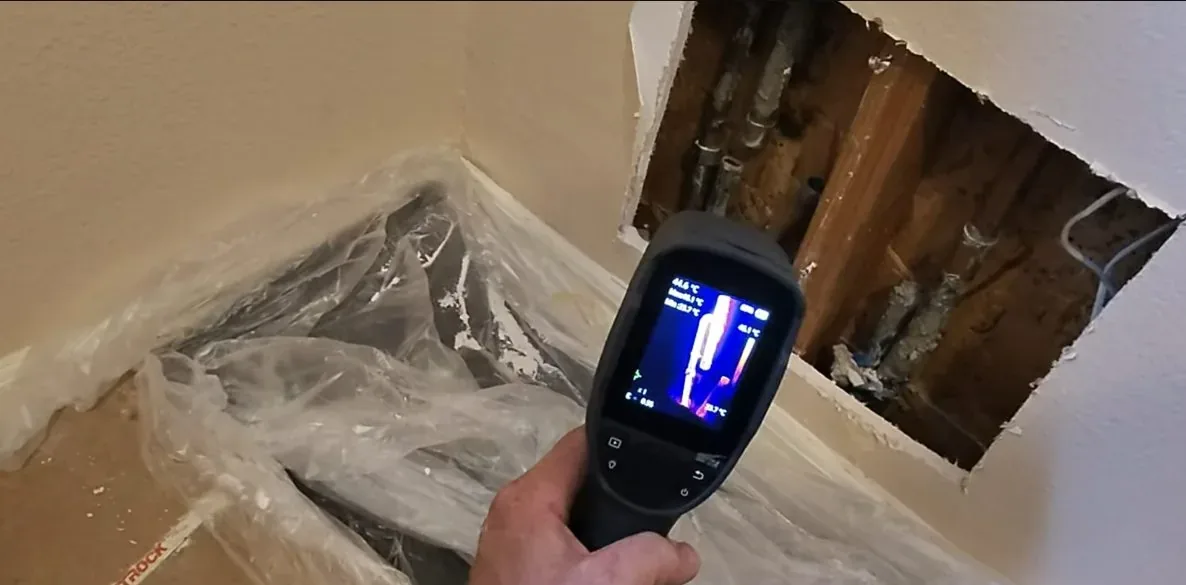
Where the water came from: ceilings, roofs, appliances and irrigation
Water damage does not always start with a plumbing failure. Leaky ceilings causing water stains may trace to a bathroom above, a roof leak causing interior damage after a storm, or a drain line from an air conditioner. If the kitchen ceiling is wet, there is a leak in the bathroom ceiling or a water spot has appeared and you cannot tell where it is coming from, say so on the call. Roof leak detection, including electronic and drone surveys, is a roofing trade; the drying crew can tell you where the water showed up inside. Water that rose through a concrete floor is a plumbing problem first; the slab leak page explains how it is found. A water damage inspection starts by asking where the water entered, because a stain that keeps growing means the source is still active. Frequent leaks causing water damage in the same spot call for finding the source before more drying is paid for.
- A bathroom leak or a collapsed ceiling that dropped wet insulation into the room below.
- A closet leak with mold from an air conditioner drain, or a hardwood floor cupping from an HVAC condensate line.
- Crawl space flooding from a broken irrigation backflow device.
- A closet carpet and pad soaked by a neighbor's sprinkler.
- Roof, ceiling and window leaks during storms, river flooding or heavy rain.
Water damage is also grouped by cleanliness: clean water from a supply line, used water from an appliance and contaminated water from a sewer or flood. The category decides which materials can be dried and which are removed, so describe the source on the call. The water damage type, meaning clean, used or contaminated, is what the crew asks about first.
Burst pipe and plumbing leak damage
A burst pipe can release hundreds of gallons in an hour, and a slow leak inside a wall can do more harm over weeks. The repair belongs to a plumber, who traces the leak and fixes the pipe, as described on the repiping page. The water that escaped is the job of the drying crew, and the two visits are ideally arranged close together so the pipe is not leaking into freshly dried material.
Freezing weather brings its own pattern: a pipe splits quietly in an unheated space and the damage appears when the thaw starts. Photograph the split pipe and the wet area before repairs, because the insurer may ask to see both. If the pipe split in an unheated space, mention it on the call, since wall cavities and insulation in that area tend to stay wet longer than the visible damage suggests.
Flooded basement, crawl space and whole-house flooding
A flooded basement raises two questions at once: where did the water come from, and is it safe to be in. Water from a supply line is clean at the start; floodwater from outside or a sewer backup is not, and it can carry contamination. Do not walk through standing water if the basement holds a furnace, a water heater or a breaker panel. Wait for the power to be shut off by a professional if the water is deep.
Basement waterproofing and a foundation inspection are separate trades from water removal, and basement waterproofers, waterproofing companies and specialists work on the cause rather than the cleanup. The crew can note where water entered, and a waterproofing contractor or a structural professional takes it from there. Crawl spaces and cellars dry slowly because air barely moves in them, and water can sit under insulation long after the floor looks dry. A flooded garage, a washroom that floods because a drain is clogged and a floor that floods whenever the water is on are all standing-water calls; the cause belongs to a plumber. Whole-house flooding, such as a water heater tank failing on an upper floor, spreads through ceilings and walls below, and moisture mapping is the only reliable way to find where it went.
Flooding from storms, river overflow or rain is a different cause with the same drying steps.
Sewage backup cleanup: water removal and what comes after
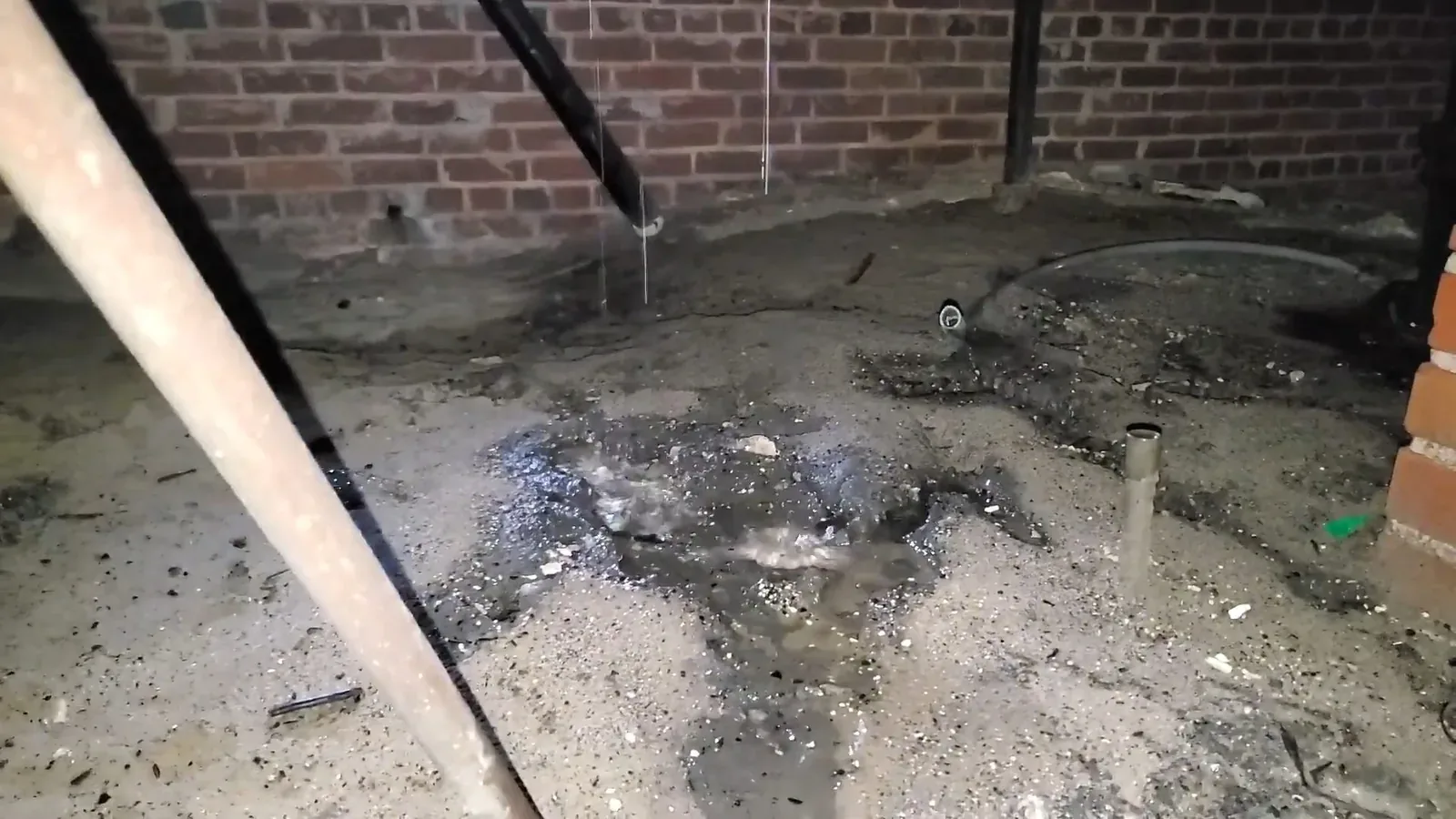
A sewage backup is handled differently from clean water. The water is contaminated, so everything it touched that is porous, such as carpet, pad, drywall and cardboard, is usually removed rather than dried. The crew removes the standing water, hauls out affected materials and dries what remains. The line that backed up is a separate job for a plumber; see the how a backed-up main is repaired.
A floor drain that slows before the backup is a drain job, covered under clogged floor drains. Keep children, pets and anyone with a weak immune system out of the area, wear gloves and boots if you must go in and do not run the washer or dishwasher until the line is cleared. Sanitizing surfaces and discarding contaminated contents are decisions to talk through on the call, because what can be saved depends on how long the material sat in the water and what it is made of.
Flooring, carpet and hardwood after a leak
Flooring responds to water in different ways. Carpet can be lifted, the pad removed and the carpet dried or replaced. Hardwood may cup or buckle within days and is often dried slowly to avoid cracking. Laminate swells at the edges and rarely recovers. Tile survives the water, but the underlayment beneath it may not. A moisture meter tells you what the surface hides.
Leaks that did not start in a pipe are treated the same way: a roof that let rain through a ceiling, an air conditioner drain line that overflowed or a sprinkler line that failed. Say what the source was, because it changes what needs fixing afterward.
Mold testing after water damage, and what falls outside it
Mold needs moisture, and fast drying is the main way to avoid it. If water has been sitting in a wall or under a floor for days, a musty smell or visible growth is a sign that mold may be present. Drying stops the cause but does not remove existing growth.
Mold testing and inspection are part of this service. When a musty smell, a stain that keeps returning or visible growth shows up after a leak, the crew inspects the affected area and tests to find whether growth is present and how far it reaches. The results answer practical questions: whether a moldy material can be salvaged, what is behind a damp wall, where an odor under the basement stairs is coming from, and what a condo association or an insurer needs to see in an assessment.
Mold remediation is different. The treatment, removal and cleanup of established growth, whether in a basement, on a ceiling, under a sink, on an outdoor structure or in a commercial space, is a separate trade and is not offered here, nor is spore detection beyond the testing described. Ask the crew to note any visible growth on the job log, and look for a separate remediation specialist; your county or borough office can say what rules apply where you live. Do not disturb the area or run fans across it, since that spreads spores.
Damage assessment, documentation and insurance
A written record of the loss helps whatever happens next. It should include the date and cause, photographs before and after, a list of materials removed, moisture readings on each visit and a list of damaged contents. Many insurers want this before they approve payment. The crew provides the job log; the claim itself is between you and your insurer.
For a vacant property, a rental unit, a condo, an apartment or a commercial property, tell dispatch who owns the structure, since access and responsibility may rest with an owner or an association. Plumbing in a business building is covered on the business plumbing page. For fire and smoke damage, soot and odor removal is outside this page, and the water damage line can say where to look.
| Problem | Handled by | Where to look |
|---|---|---|
| Pipe still leaking | A plumber | The main line, then the repair pages |
| Standing water and wet materials | Water damage line | This page |
| Backed-up sewer line | A plumber | Sewer line repair |
| Mold testing and inspection | Water damage line | This page |
| Removing existing mold growth | A remediation specialist | Ask the borough or county office |
| Insurance claim | You and your insurer | Use the job log and photographs |
The amount of work shapes the quote, and the notes on what moves a drying quote list the factors. Drying equipment such as air movers and dehumidifiers is placed according to the moisture map, not a fixed count per room.
Water damage questions
How soon should drying start after a leak or flood?
As soon as possible, and ideally within a day. Wet drywall and pad begin to deteriorate quickly, and delay means more material to remove.
Can I dry a wet carpet myself?
Small spills, yes, with a wet vacuum and fans. After a larger leak the pad and the floor beneath need to be checked with a moisture meter, which is what the crew brings.
Does the water damage line fix the pipe?
No. A plumber repairs the pipe. The water damage line removes standing water and dries the structure. Close the main valve first if the pipe is still running.
Do you test for mold, and do you remove it?
Mold testing and inspection are part of the service. Removing and treating established growth is a separate trade; ask the crew to note any growth on the job log and look for a remediation specialist.
Plumbing behind the water
Water damage in Camp Hill?
Call the water damage line, or dispatch if a pipe is still running. Both are answered around the clock.
Water damage line (717) 349-9255- Licensed and insured plumbers
- Same-day service when available
- 24/7 emergency dispatch