
Emergency Repiping and Pipe Repair in Camp Hill, PA: Burst, Frozen and Pinhole Leaks
The decision at the center of most pipe calls is whether to fix this one failure or replace the lines. One burst pipe on a sound system is a repair. A second or third leak on the same system, in a short time, is a pattern, and the question becomes how much pipe is left to trust.
Say which pipe failed, what it is made of if you know, and whether water is still running. Close the main shutoff first if it is.
- Licensed and insured plumbers
- Same-day service when available
- 24/7 emergency dispatch
Burst pipe: the first minutes and the first call
A burst pipe can release dozens of gallons a minute, so speed matters more than neatness. Shut the main valve, open the lowest tap to drain the line and switch off power to any room with standing water if the breaker is dry and reachable. Take photographs of the break and the damage before cleanup, because both the plumber and an insurer will want them.
- Shut the main valve. Look near the meter or where the pipe comes through the foundation wall.
- Drain the line. Open the lowest faucet and flush the nearest toilet to relieve pressure.
- Contain the water. Move belongings, lift rugs and use towels at doorways.
- Photograph, then call. Dispatch routes the call on the spot. Same-day help is offered when it can be done, and arrival times are not promised.
Do not step into it. Call 911 or an electrician for the power question, and leave the plumbing for after the area is safe.
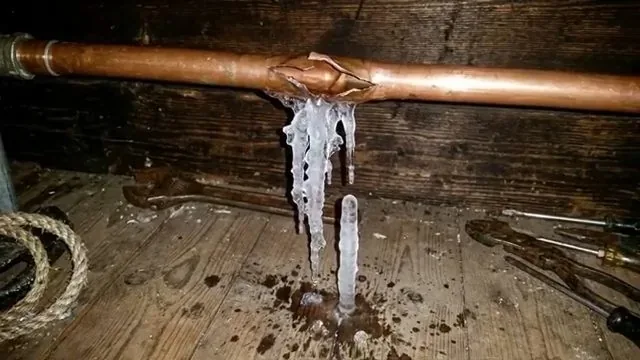
Frozen pipes: thaw, split or both?
Cold snaps here are strong enough to freeze pipes. NOAA climate normals put the Harrisburg area's January low near 23 degrees Fahrenheit on average, and the January 2014 freeze produced frozen-pipe damage across the region, according to FOX43 and WITF. Pipes in exterior walls, unheated garages, crawlspaces and attics are the usual victims.
A frozen pipe is a problem, but a split pipe is the real danger, because it floods when the ice melts. If a tap gives only a trickle in freezing weather, leave it open, close the main shutoff and look along the line for frost or a bulge. Do not use an open flame. A plumber can thaw a line safely and check for splits before the water goes back on. Insulating exposed pipes and keeping heat on in cold rooms prevents most of it.
Pipe frozen or burst right now?
Close the main, then call. Say which pipe, which room and whether anything is dripping.
Call (717) 897-7332Pipe repair: when a patch is the sensible answer
A repair makes sense when a single failure sits in an otherwise healthy line. The plumber cuts out the damaged section and joins new pipe with the right fittings: soldered or crimped joints on copper, push or crimp fittings on PEX, solvent welds on plastic. A repair is quick and keeps the rest of the system untouched. Ask what the repaired section is made of and whether it matches the pipe beside it, because mixed metals can corrode where they meet.
Ask also whether the plumber checked the pressure and the shutoff valves. A high water pressure reading can be the real cause of repeated failures, and a pressure regulator is a smaller fix than a new set of pipes.
Pipe replacement: swapping a run without redoing the house
Between a patch and a whole-house job sits replacing a run: the kitchen branch, the line to an upstairs bath or the hot side only. It suits a house where one area keeps failing and the rest is fine. The plumber opens the walls along the run, installs new pipe and closes it up, so the cost is mostly access and finish repair.
Check how the new run joins the old pipe. A transition fitting between different materials should be the right type, and the new run should be tested under pressure before the walls are closed. Ask which fixtures will be without water during the work and for how long, because replacing a run usually means the supply to that branch is off for a day, and whether the old pipe is removed or left in the wall.
Whole-house repiping: when the pattern says replace it all
Whole-house repiping replaces the water supply lines throughout the house, usually with PEX or copper. It makes sense after several leaks in a short time, with discolored or rusty water throughout, or when a pipe material known for failing is found. Done well, it takes a few days, with walls opened at planned points, and ends the cycle of repairs.
Ask for a written scope: which fixtures and valves are replaced, where walls will be opened, who patches drywall and paint, and what permit or inspection applies. The borough or township sets that last item, so the borough office is the place to ask. Before signing, ask the contractor for the contractor's state registration number and call 1-888-520-6680 to check it is current.
Copper pipe: pinholes, pitting and when to replace
Copper lasts a long time, but water chemistry, high velocity and age can eat small holes through the wall from the inside. Those pinhole leaks often appear in more than one spot, and green or blue stains at joints are a clue. One pinhole can be repaired; several in a short time suggest the pipe wall is thin along its length.
Have the plumber check whether the leaks cluster on hot lines, where heat accelerates wear, and what the water pressure is. If the pattern points to the pipe itself, replacement is a better use of money than another repair.
| Material | How to recognize it | Typical failure |
|---|---|---|
| Copper | Orange-brown, soldered joints | Pinholes, pitting, green stains at joints |
| Galvanized steel | Dull gray, threaded joints, magnet sticks | Internal rust, falling pressure, leaks at threads |
| PEX | Flexible, red, blue or white tubing | Fitting leaks if poorly crimped; sun damage if exposed |
| CPVC | Rigid, cream or light-colored plastic | Brittleness and cracks with age |
| Polybutylene | Gray flexible plastic, often with plastic fittings | Fitting and pipe failure |
Galvanized pipe and runs under a slab or in the ground
Galvanized steel pipe rusts from the inside, narrowing the passage until pressure drops, and eventually leaks. A simple check: a magnet sticks to galvanized steel and not to copper or plastic, and galvanized pipe looks dull gray with threaded joints. If you find it, a plumber can judge how much life is left from the flow and the condition at the joints.
Lines under a slab or in the yard are the hardest to reach. A leak there is located first, then either repaired at the spot or abandoned and replaced with a new run through walls or the attic. The slab leak page compares those routes, and a yard line follows the water line repair page.
Third leak this year?
Request a plumber who will price a repair and a repipe side by side so the numbers can be compared.
Call (717) 897-7332Other pipe types and quick notes
- PEX: flexible plastic tubing now common for repiping; it resists freezing splits better than rigid pipe but is not freeze-proof.
- Polybutylene: a gray plastic supply pipe used in homes decades ago and associated with failures; if you find it, ask for an assessment.
- Cast iron, PVC and CPVC: drain pipe is usually cast iron or PVC; CPVC is a rigid supply pipe that can turn brittle with age.
- Pinhole leaks: a sign of corrosion from inside; look for the same pattern on neighboring pipes.
- Emergency calls: shut the main and call; the first answer is stopping the water, not choosing a pipe.
Repair and repipe quotes are shaped by access, material and the number of fixtures; a longer explanation sits under repipe pricing factors.
Burst pipe and repipe questions
What should I do when a pipe bursts?
Picture water pouring from a ceiling: close the main shutoff first, then open the lowest tap to drain the line. Move belongings and take photographs, then call. Do not run electrical appliances near the water.
How is a pipe emergency different from a regular repair call?
Two answers are common. For an active leak, you stop the water yourself and call right away for a plumber. For a slow drip or a stain, you can book a visit and mark the spot. The difference is whether water is still flowing.
Who do I call for frozen pipes or a broken pipe?
A plumber. If the street is dry as well, the water company is the first call; if only your house is affected, call dispatch.
What if my pipe bursts after a deep freeze?
The cold that froze the line usually split it at a weak spot. Shut off the main as soon as water appears, because a split releases water as the ice melts. A plumber will find the break, repair it and check nearby pipes for hidden splits.
How do I know if my house has galvanized pipes?
- Look at exposed pipe near the water heater or meter.
- Galvanized steel is dull gray with threaded fittings.
- A magnet sticks to it; it does not stick to copper or plastic.
- Scratch the surface gently: silver means galvanized, orange-brown is copper, and white or gray plastic is not metal.
When a pipe problem is bigger than the pipe
Burst pipe, any hour
Close the main, then call. The dispatcher takes the details and arranges the rest.
Call (717) 897-7332- Licensed and insured plumbers
- Same-day service when available
- 24/7 emergency dispatch